
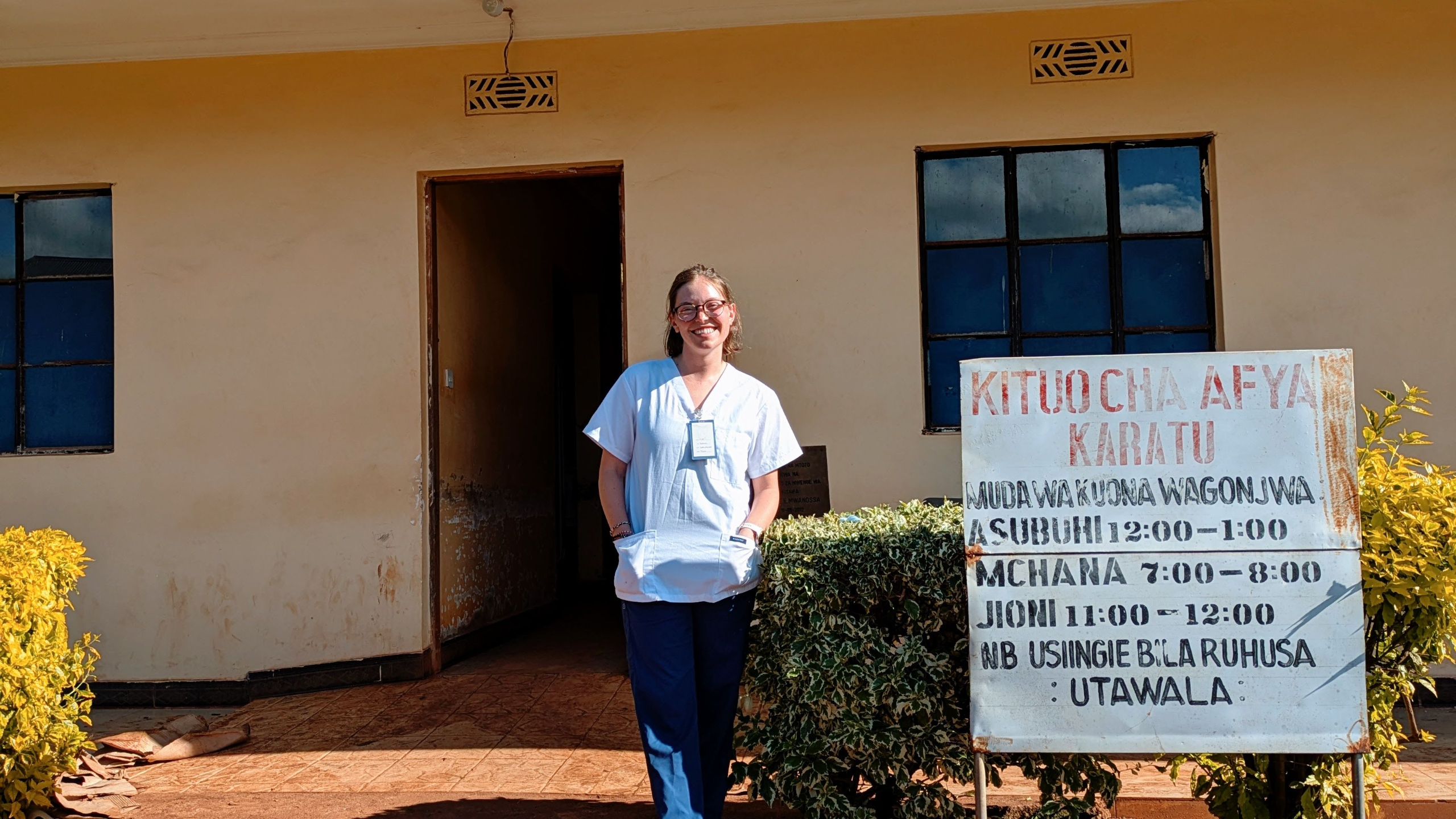
I went to challenge myself. To challenge my beliefs about birth. To learn something I couldn't learn without going elsewhere.
I worked in three clinics in Karatu. And I am still, a full year later, processing what I saw.
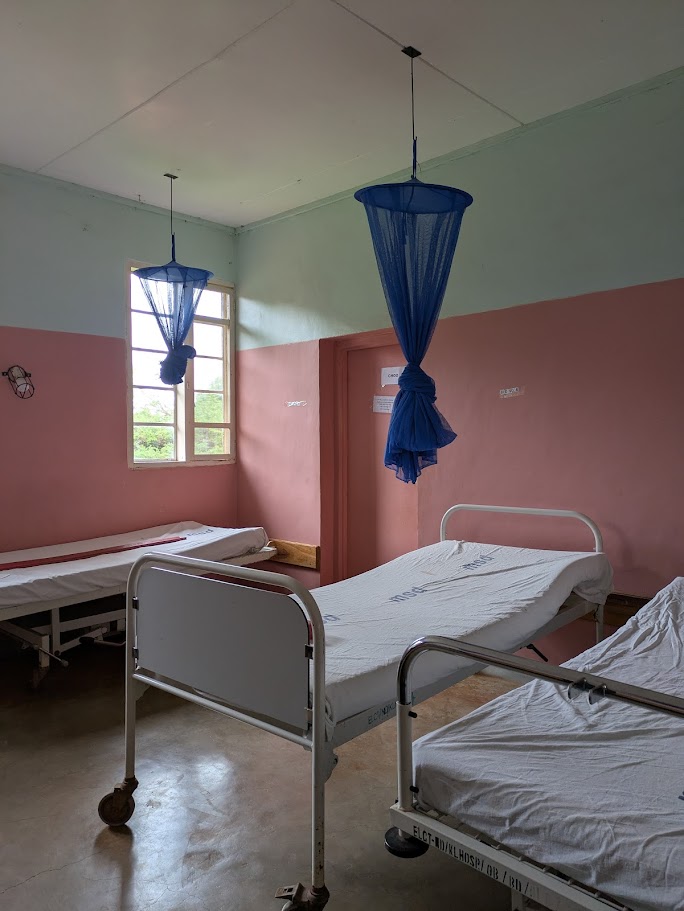
The laboring room had about twenty beds. That same room was the prenatal room, the labor room, the postpartum room; it was just the room.
When it was time to push, you walked yourself across the hall to one of three delivery beds. And then you lie on your back, hands to ankles, and push your baby into the world.
No epidural. No adjustable bed. No overhead fluorescents, just natural light through the windows (or flashlights if the power was out). Women moved freely during labor because no one told them not to.
And when each baby arrived, the family that had been standing outside in the rain, just waiting, came in. A bunch of families tangled up together in the postpartum room, helping, teaching, and figuring it out collectively.
It was one of the most beautiful and heartbreaking things I have ever seen.
The breastfeeding thing still lives in my head rent free.
Most women learned side-lying position first — because the beds don't move, there are no pillows, and it just made sense. Especially when the clinic was overfull, and beds were shared.
Here in the US, we treat side-lying as something you graduate to. An advanced position. But it's actually a game-changing position that works with your anatomy. No mountain of props required.
I watched some of the best latches I have ever seen come from women learning it on day one. I just kept thinking: we've been overcomplicating this.
And then I walked into a C-section.
I'm not going to overdramatize this. The moment speaks for itself.
Minimal anesthesia. Major surgery. A woman on that table, completely alone.
I walked out of that room knowing, not in a slow, dawning way, but in a very immediate, certain, clarifying way, that I could not witness that and go back to doing doula work and my corporate fashion job like nothing happened.
So I called my boss. And I quit to officially run Peachey Pregnancy Co. full time.
Here's what Tanzania actually made me as a doula.
I walked into those clinics knowing maybe twenty words of Swahili. Twenty. And I had to figure out how to support someone without language. Without my usual tools. Without being able to explain what I was doing or ask what they needed.
I had to learn to just be there.
That sounds simple until you're actually doing it. Until you're standing next to someone and something is happening that feels wrong, and your every instinct is to fix it or stop it or say something, and you can't. It's not your culture. It's not your call.
Birth is culture. It always has been. And my role in Tanzania, and here, with every single family I work with, is not to arrive with my own agenda and call it support. It's to show up and learn. To follow her lead.
Tanzania stripped away every tool I thought I needed and showed me what was left underneath.
Presence. Belief. Witness. That's the whole job. That's always been the whole job.
Tanzania is not a cautionary tale.
It is not a "be grateful for what you have" story. The women I saw were not victims of their circumstance; they were powerful. The staff was resourceful and caring, doing so much with what they had.
Do they deserve more resources? Yes. Absolutely. Equitable access to education, tools, and pain management matters enormously. It can be the difference between life and death.
And also: I came home a different birth worker because of what I learned from every single person there. Both things are true.
I think about those women constantly. When I'm sitting with a client who's scared. When I'm helping a partner find their role. When someone tells me they don't trust their body.
I think about a woman walking across a hallway (at 10 cm) to push her baby into the world, and then getting up and walking herself back as soon as the placenta is out.
You were always capable of more than you knew.
That's what Tanzania gave me. And I'm still giving it back, one family at a time.

Responses