
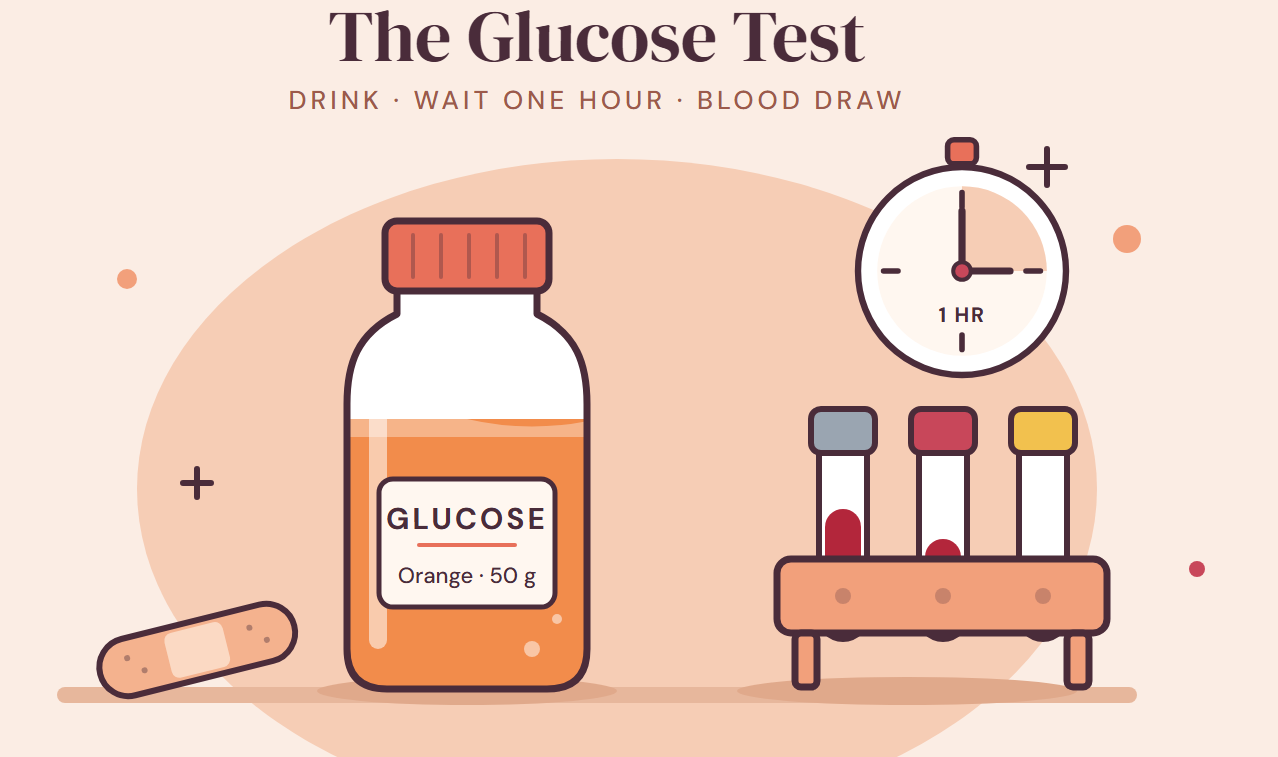
The glucose test screens for gestational diabetes, a condition that usually has no symptoms. Most people take it between 24 and 28 weeks. It starts with a one-hour screen, and only an elevated result leads to the three-hour test. I often receive some version of the same text from my clients: "I just drank the orange (or clear) thing and I think I might puke." So first, solidarity... That drink is not for everyone, to say the least.
But once the sugar headache fades, a lot of people ask me the questions that are actually on their mind: What is this actually testing for, and do I have other options. Both excellent questions, so let me try to answer.
What the test is actually looking for
The glucose screening checks for gestational diabetes, which affects somewhere between 6% and 10% of pregnancies. The tricky part is that it usually has no symptoms, so without testing, you and your provider wouldn't know it was there. Left untreated, it's associated with a higher chance of a larger baby, an increased likelihood of needing a cesarean, preeclampsia, and some complications for baby after birth like low blood sugar and jaundice.
This is one of those places where the reason behind the test genuinely makes sense, even if the drink itself feels nasty.
How the standard test works
The initial screen is the one you probably already know. You drink a beverage with 50 grams of glucose, no fasting required, and your blood is drawn an hour later. If that number comes back elevated, your provider will follow up with a three hour version that does require fasting and multiple blood draws.
What your actual options are
Here's what most people don't realize: you have choices, even with glucose testing and you're allowed to talk through them with your provider instead of just showing up and drinking whatever's handed to you.
The Fresh Test. This is an all-natural, FDA registered alternative to the standard glucola drink. In at least one study, people preferred it to the classic orange drink. Insurance coverage varies, so it's worth calling ahead.
Home glucose monitoring. Some providers will allow a week of at home finger prick testing instead of the drink, usually a few times a day. It's more involved day to day, and it doesn't catch every single case of gestational diabetes the way the standard test does, but for some people it's a more tolerable trade off.
Declining altogether. You are always allowed to decline any test. What's important is that ACOG and the American Diabetes Association recommend getting tested for gestational diabetes, so if you decline or choose an alternative, that's a conversation to have openly with your provider rather than a decision to make quietly on your own.
What's the point?
This isn't about being anti test, and it isn't about being pro test either. It's about you actually understanding what's being asked of you and why, so that whatever you decide is a decision you made rather than one that happened to you.
If you want help figuring out exactly what questions to bring to that conversation with your provider, that's a huge part of what we work through together in prenatal doula support. And if you're still shopping for a provider or want to make sure your questions get answered before you're mid appointment and forgetting half of them, our free provider question guide is a good place to start.
You get to ask questions. You get to understand your options. That's not difficult, that's just informed care.
Happy you're here,
Kyndrick



Responses